
The quality of a pre-engineered steel building is not determined solely at the construction site but begins to take shape from the very first stages of factory production. From material selection, component fabrication, and quality control to transportation and erection, every step in the process plays an important role in creating a durable structure that meets technical requirements, project schedules, and operational efficiency standards.
Given the specific characteristics of industrial construction, where precision, load-bearing capacity, and construction time are always top priorities, establishing a coordinated production and construction process is essential to ensuring the overall quality of the project.
1. Construction Quality Begins with Factory Production
Unlike traditional construction methods, pre-engineered steel buildings utilize steel components that are prefabricated at the factory according to technical drawings before being transported to the construction site for erection.
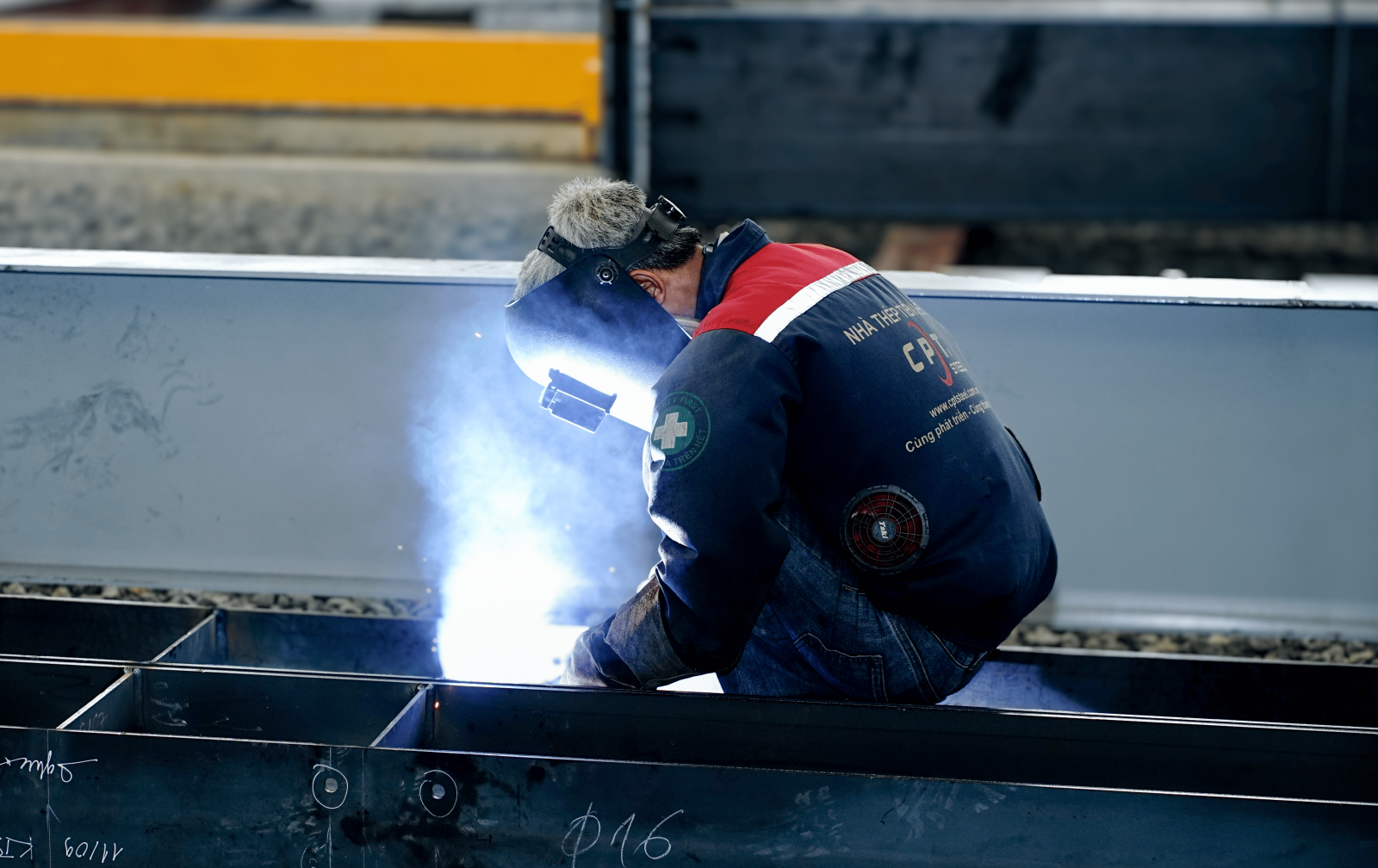
The production process requires precision at every stage, from incoming material inspection, cutting, assembly, and welding to component surface finishing. Each component must be fabricated in accordance with technical specifications, ensuring dimensional accuracy, proper geometry, and reliable connections during on-site erection.
In particular, quality inspection throughout the production process plays a crucial role in detecting and minimizing technical deviations at the factory. This not only contributes to improving component quality but also reduces the need for adjustments and repairs during construction.
Precisely fabricated components at the factory provide the foundation for a smooth and efficient erection process at the construction site.
2. Strict Quality Control at Every Stage of Steel Structure Fabrication
To produce steel structures that meet design requirements, the production process must follow a clearly defined sequence, with close coordination among the engineering, production, and quality control departments.
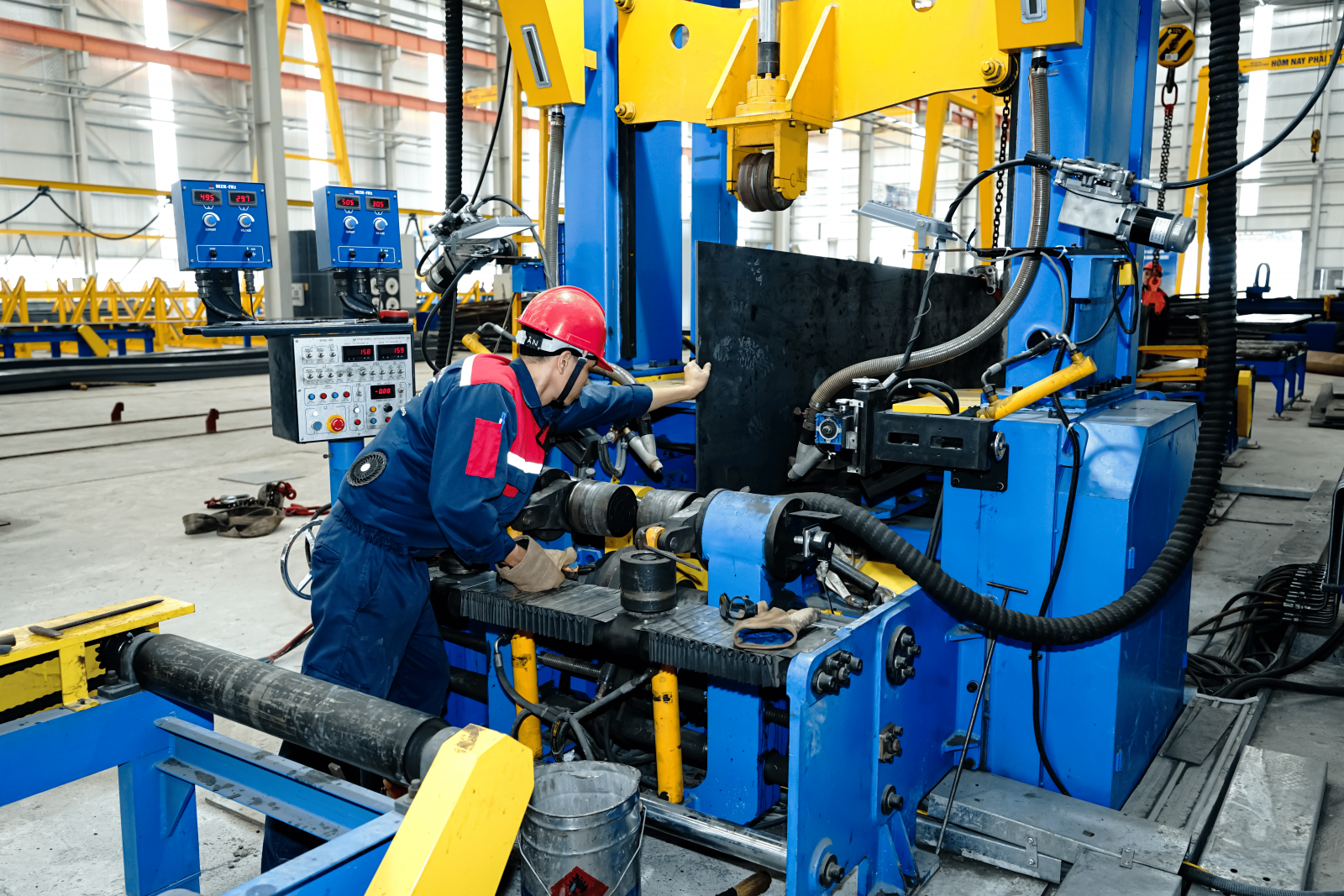
The main stages include:
Incoming Material Inspection: Ensuring that the materials used meet the technical requirements of the project.
Component Cutting and Fabrication: Performing fabrication in accordance with production drawings, with particular attention to dimensional and geometric accuracy.
Structural Assembly and Welding: Controlling connection positions, weld quality, and other relevant technical requirements.
Surface Treatment and Finishing: Carrying out cleaning and protective coating processes according to the specific requirements of each project.
Final Product Inspection: Evaluating component quality before transferring them to the transportation and erection stages.
Continuous quality control throughout these stages helps improve consistency among structural components, minimize errors, and facilitate construction activities in subsequent phases.
3. From Factory to Construction Site – Coordination Determines Construction Efficiency
Once completed at the factory, steel structural components are classified, marked, and transported to the construction site according to the erection plan.
At this stage, coordination between production, transportation, and construction is particularly important. Components must be supplied in the correct types, quantities, and at the appropriate times to ensure continuity throughout project implementation.
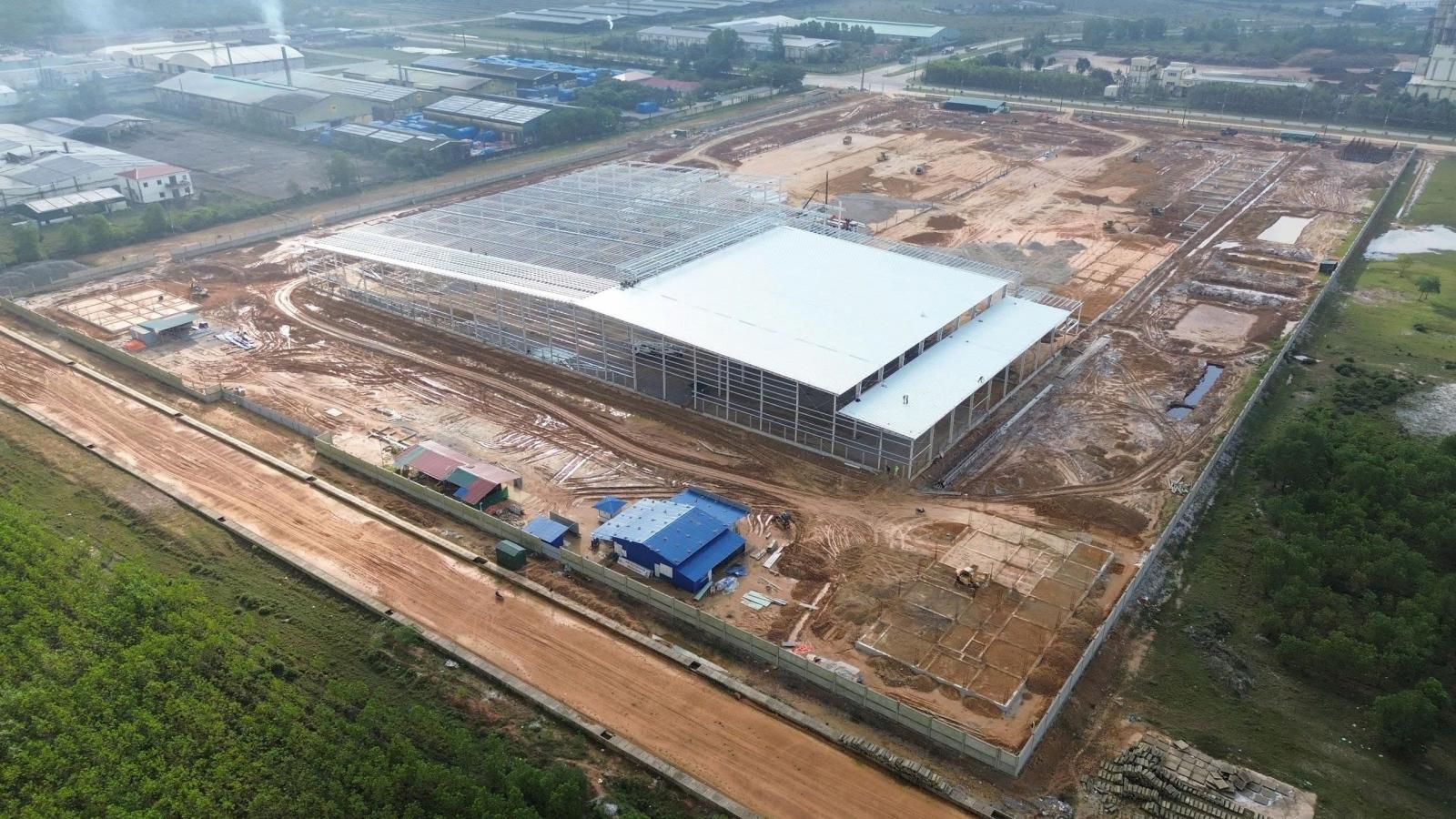
At the construction site, steel structure erection requires strict adherence to construction sequences, component positioning, connection requirements, and occupational safety standards. Precision during factory fabrication contributes to reducing alignment time, minimizing additional work, and optimizing construction resources.
When production and erection processes are closely coordinated, the benefits extend beyond project schedules to the quality and overall structural stability of the building.
4. CPT STEEL - Prioritizing Quality at Every Stage of Project Implementation
In the field of steel structures and industrial construction, CPT STEEL understands that a high-quality building requires close coordination between technical solutions, production processes, and on-site construction activities.
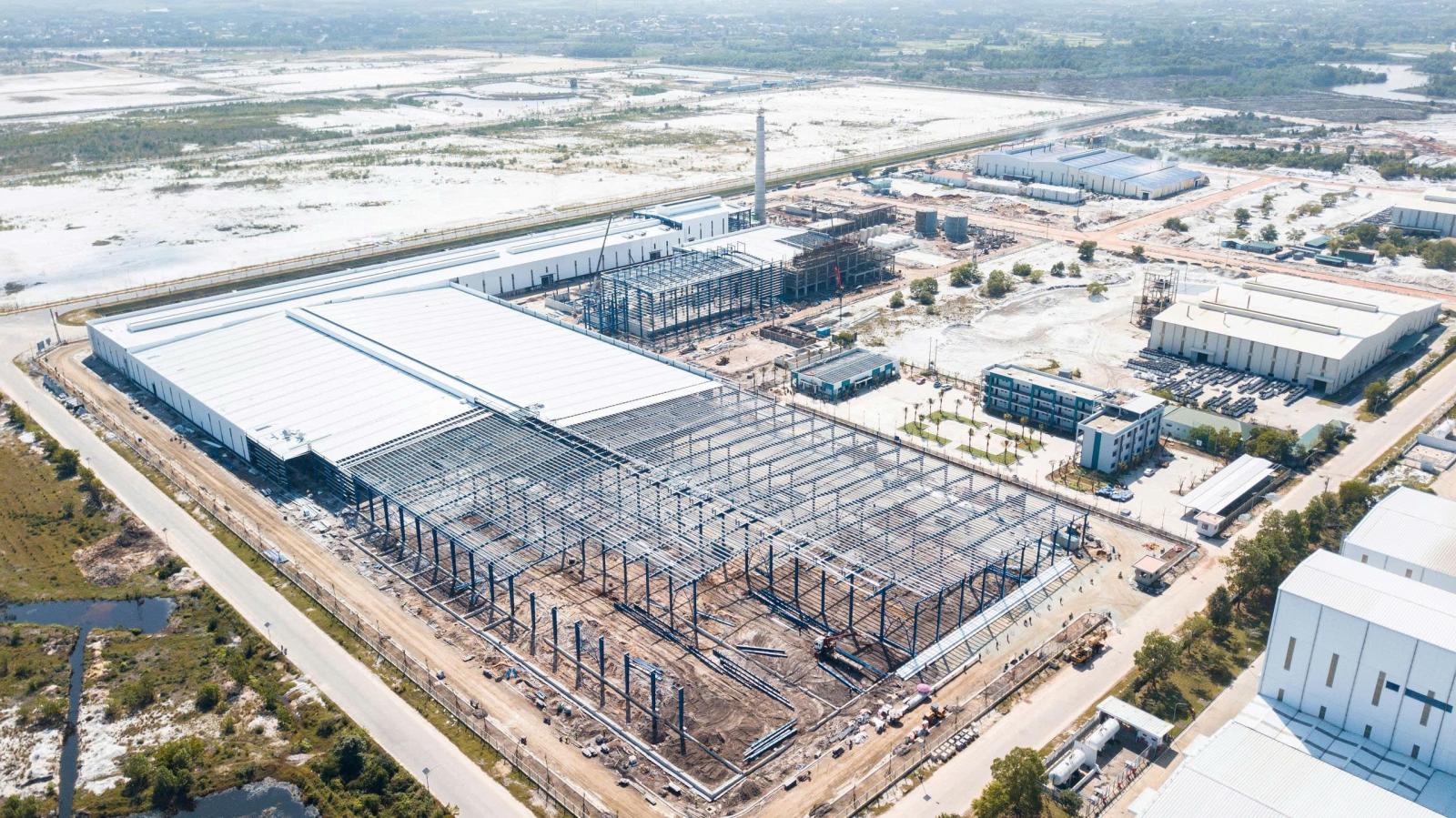
Therefore, CPT STEEL consistently strives to pay close attention to every stage of project implementation, strengthen coordination among departments, and uphold a strong sense of responsibility throughout project execution. From structural components fabricated at the factory to the erection process at the construction site, every stage must be carefully controlled to meet technical, quality, and schedule requirements.
In addition, close collaboration with project owners, general contractors, and relevant parties is also an important factor in ensuring efficient project implementation, tailored to the specific characteristics and requirements of each project.
5. A Meticulous Process - The Foundation for Durable Structures
As demand for industrial factories and infrastructure continues to grow, pre-engineered steel buildings continue to demonstrate their advantages in constructability, flexibility, and operational efficiency.
However, to fully maximize these advantages, quality must remain a central priority throughout the entire process, from production to erection.
For CPT STEEL, quality is reflected not only in the completed structure but also in the meticulous execution of every stage, the precision of each component, and the sense of responsibility maintained throughout project implementation. This also serves as the guiding principle for CPT STEEL to continuously enhance its capabilities and meet the increasingly demanding requirements of industrial construction projects.


